
.png)
 |
|---|
THE BUSINESS CHALLENGE
When the Loading Plan Meets Live Operations
The Terminal Operating System (TOS) generates the initial container loading plan. During rail loading, the actual sequence or container placement can differ from that plan. Teams need to spot those changes quickly, assess them against applicable railway rules, and decide whether to replan before loading continues.

Plan and Reality Can Diverge
A container placed on a different wagon or in a different sequence can affect the remaining loading plan.

Stacking Rules Add Complexity
Single- and double-stack arrangements must be checked against the rules and constraints applicable to the route, wagons and containers.

Decisions Need Live Visibility
Operators need timely evidence of loading deviations so they can review the issue, trigger replanning and verify the revised load.
CONNECTED TECHNOLOGY ECOSYSTEM
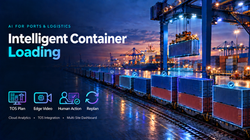
From TOS Plan to Verified Rail Loading
Monitor live loading, surface exceptions and support operator decisions before the rake leaves the terminal.

TOS Plan & Rules
The TOS provides the initial rake loading plan, alongside the applicable railway and stacking constraints.

Live Edge Video
Cameras monitor container placement and visible condition during loading. Edge processing compares placement with the current plan.

Exception Alerts
Potential placement deviations or suspected container damage are presented with visual evidence for operator review.


Placement Deviation — Human-Led Replanning
The operator reviews the exception and, when needed, commands the system to replan. The revised plan is checked against applicable constraints before execution.

Suspected Damage — Human Review & Inspection
The operator reviews the visual evidence and decides whether the container needs inspection, a hold or a change to the loading plan.
Target outcome
Railway-rule-verified loading before departure


Early exception handling supports faster rake turnaround


Continued Verification
TOS Integration
Cloud Analytics
Multi-Site Dashboard
WHERE IT CAN APPLY
Rail Loading Across Port and Logistics Operations
Video analytics and operations research can support loading decisions across different rail-connected sites. Each application would need to reflect the site’s TOS, operating procedures and applicable railway rules.

Seaport Rail Terminals
Monitor container transfers from the port yard onto outbound railway rakes.

Factory-Side Loading
Monitor rail loading at iron, steel and cement facilities with rail sidings.

Inland Container Depots
Compare the TOS plan with actual container loading at inland rail facilities.

High-Speed Freight Corridors
Check rake loading against route-specific requirements before departure.

Intermodal Logistics Hubs
Bring visibility to container movements between road, yard and rail operations.

Multi-Site Terminal Networks
Give operators a shared view of loading progress and exceptions across locations.
THE AI-CONNECTX ROLE
We Connect the Ecosystem.
AI-ConnetX brings together technology providers and system integrators. These partners, in turn, engage port, rail and industrial stakeholders to identify practical opportunities for intelligent container loading. AI-ConnectX helps align partner capabilities with operational requirements and a path to site validation.

Commercialization Strategy
Help technology providers and system integrators define the use case, value proposition and commercial approach.

Ecosystem Development
Connect the video analytics, planning, TOS integration and rail-domain partners needed to evaluate an end-to-end solution.

Market
Development
Work with system integrators to identify and qualify opportunities through their port, rail and industrial relationships.

GTM
Activation
Equip partners for customer discussions, demonstrations and pilot planning, supporting their engagement with end customers.

Technology development, solution engineering, integration, deployment and technical support are provided by the applicable technology and system-integration partners. Site-specific requirements and railway rules require validation.
Exploring a Port or Logistics Opportunity?
If you are a technology provider with video analytics and operations research expertise, or a system integrator working with port, rail or industrial customers, let’s discuss how the right capabilities and partners can come together.